When Not to Renew a Franchise Lease
 Revscale AI Team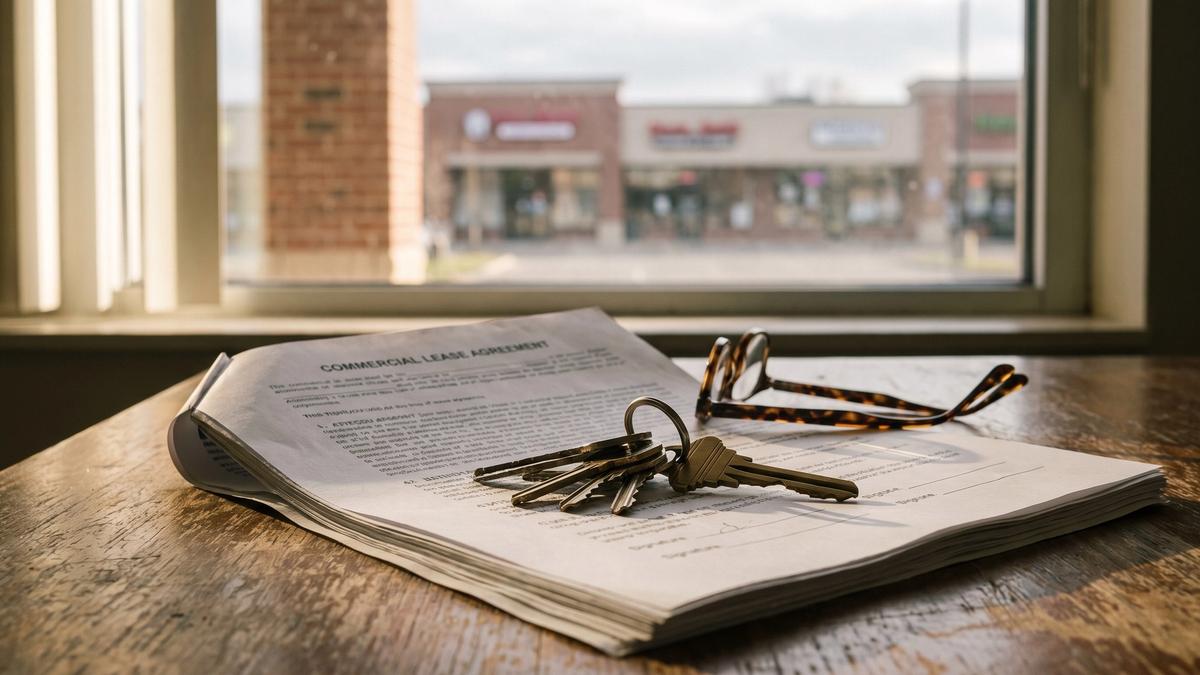
A franchise lease renewal looks like paperwork. Sign the option, keep the doors open, move to the next fire. That framing is how multi-unit operators get locked into the most expensive five-year decision they make all year, on autopilot. A franchise lease renewal is a capital commitment, not an administrative step. The useful question is not whether the renewal option exists. It is whether this specific unit earns another term at the rent the renewal will set.
Why renewal gets treated as a formality
The renewal option was negotiated years ago, often before the unit opened, by someone who wanted to protect the location at any cost. By the time the option comes due, the operator has sunk hundreds of thousands into buildout, trained a crew, and built a local customer base. Walking away feels like torching all of it, so the option gets exercised by reflex, and the only thing anyone negotiates is how hard to push back on the new rent. The buildout cost is real. It is also already spent, which means it should carry no weight in a forward-looking decision. The money that matters is the rent you have not yet committed to pay.
Occupancy cost is the number that decides it
Occupancy cost is rent plus the charges that ride with it: common area maintenance, property taxes, building insurance, and any municipal fees the lease passes through. Measured against sales, it is the cleanest signal of whether a location can carry itself. The working benchmark across restaurant and retail franchising is 6 to 10 percent of gross sales. Past 8 percent, margin gets tight. At 10 percent, occupancy starts to seriously impair the unit's ability to turn a profit, and there is little room left for a soft sales year.
A renewal resets this ratio. If sales at the unit have been flat for three years and the renewal raises rent 12 percent, a location sitting at 7.5 percent occupancy can cross 8.5 percent the day you sign. The unit did not change. The math under it did. Running the post-renewal occupancy ratio before you commit is the single most clarifying thing an operator can do, and most skip it.
The escalation math nobody runs at signing
Commercial leases escalate on a schedule, and 3 percent a year is the standard in a triple-net structure. That number feels harmless in isolation. Compounded, it is not. On a five-year lease with 3 percent annual increases, renewing into a second term at the same structure leaves you paying close to 50 percent more rent than you did the day you first opened, for the same four walls.
This is where the renewal option cuts both ways. An option that re-adjusts to fair market value can spike rent in a strong corridor. An option capped at a fixed increase protects you in a hot market but keeps you locked into a declining one. Operators tend to celebrate the cap and ignore the lock. The cap only helps if the location is worth staying in.
When the trade area moved and the lease didn't
A lease is a ten-year bet on a half-mile radius. Trade areas do not hold still for ten years. Coresight Research projected roughly 15,000 U.S. store closures in 2025, more than double the 7,325 closures recorded in 2024. When an anchor tenant goes dark or a center loses its draw, foot traffic to every unit around it drops, but the rent obligation does not move with it.
This is the renewal scenario operators handle worst. Sales have softened, and the instinct is to blame execution: the manager, the staffing, the local marketing. Sometimes that is right. Often the real story is that the co-tenants who used to pull customers past your door have left, and no operational fix rebuilds traffic the center no longer generates. Renewing here means signing another decade against a trade area that already told you where it is going.
A franchise lease renewal scorecard worth running
A renewal decision becomes defensible when it answers four questions with numbers instead of attachment.
- What is the unit's occupancy cost ratio at the renewal rent, not today's rent? Above 9 percent on flat sales is a stop sign.
- Has the trade area strengthened, held, or decayed since the last term? Judge it on co-tenancy and traffic, not nostalgia for what the corner used to be.
- What does the escalation curve cost across the full renewal term in total dollars, not the year-one number you will quote yourself to feel better?
- Could the same capital and operator attention earn more in a new unit or a relocation within the same market?
Make the renewal a decision, not a default
None of this argues against renewing. Most renewals are correct, because most locations still work. The argument is against renewing by reflex, which is how a portfolio quietly accumulates two or three units that drain cash for another decade because nobody ran the numbers while there was still a choice.
The reason operators default is not laziness. It is that the data needed to decide well sits in separate places: sales in the point-of-sale system, occupancy terms in a lease document in a drawer, trade-area health in nobody's system at all. Pulling it together for forty units, on the timeline a renewal option demands, is the actual barrier. This is where connected location intelligence earns its keep, and what platforms like Revscale are built to surface: every unit's real occupancy ratio, escalation exposure, and performance trend in one view, before the option date forces a blind call.
Run the occupancy math at the new rent before the option date, not after. A franchise lease renewal signed without that number is not a renewal. It is a ten-year guess that compounds at 3 percent a year whether the location earns it or not.