Signed but Not Opened: The Franchise Pipeline Gap Hiding in Item 20
 Revscale AI Team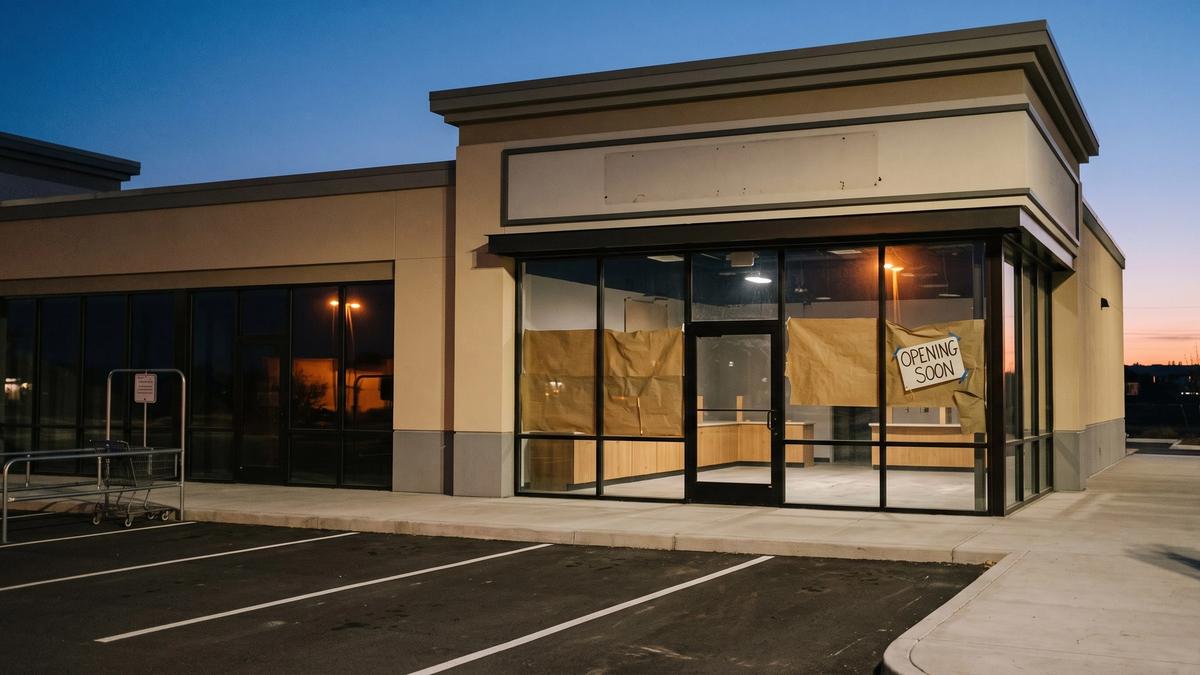
Your development team reported a strong quarter. Agreements signed, territories awarded, a pipeline that looks full heading into next year. You already know that number, because it is the one that gets read aloud on the call. The number that rarely gets the same attention is how many of those signed deals will ever open a door. That gap is where franchise growth stalls without anyone announcing it, and it has a name sitting in the disclosure document: signed but not opened.
What signed but not opened actually measures
Item 20 of every Franchise Disclosure Document reports the system's outlet activity. One of its tables lists, state by state, the franchise agreements that exist for units with no open location as of the end of the last fiscal year. A franchisee signed, paid the fee, took the territory, and has not opened. The table counts them. What it does not tell you is why each one is still closed. The franchisee may be hunting for a site, waiting on a lease, mid-construction, stuck in permitting, short on capital, or quietly reconsidering the whole thing. The disclosure gives you the count and leaves you to work out the cause. Most candidates, and plenty of development teams, read right past it.
Why development scoreboards count the wrong number
A signed agreement and an open unit are not the same asset, and treating them as one distorts the only growth figure that matters. Royalties come from open units. Marketing fund contributions come from open units. System revenue comes from open units. A signature commits a franchisee on paper. An opening turns that commitment into a location that pays. When a development team reports deals closed as its headline metric, it is reporting intent, not output.
The two diverge more than most brands admit. Historical Item 20 data shows how wide the gap runs: in 2014, Sport Clips opened 19.7 percent of the units it carried as signed but not opened, and Great Clips opened 23.7 percent of more than a thousand sold units. The rest stayed in the backlog, some for years, some for good. A pipeline that converts a fifth of its signed units in a year is not a detail you can wave off. It is the actual growth rate, hiding behind a bigger one.
Financing is where most of the fallout happens
Ask why a signed unit stays closed and the answer, more often than any other, is money. A franchisee can pass discovery, clear the validation calls, and sign with full intent, then fail to close the funding that turns the agreement into a building. The 2025 lending environment made that harder. New SBA rules now require a minimum 10 percent equity injection from the borrower and cut the maximum amounts on the faster loan programs, which pushes more franchise buyers into standard 7(a) loans with longer processing and heavier documentation.
Roughly a quarter to a third of franchise acquisitions run through SBA lending, so a tighter SBA is not a side issue. It is a direct constraint on how many signed deals reach an opening. Interest rates make it worse: the average 7(a) rate sat near 9.2 percent in 2025, which changes the math on a six-figure build-out and gives a hesitant franchisee a reason to stall. Many conventional lenders also avoid franchise loans under $350,000, which leaves candidates in mid-range systems with the hardest financing path of all. None of this shows up on a development scoreboard that stops at the signature.
The ratio that should worry you
There is a single number worth pulling from Item 20 before you trust any growth story, your own or a brand you are evaluating: openings divided by the signed-but-not-opened backlog carried into the year. If a system enters the year with 200 units signed and unopened and opens 40 of them, that is a 20 percent conversion rate, and the backlog is telling you something the headline unit count will not. A healthy, well-supported pipeline clears its backlog at a steady pace. A congested one accumulates signatures faster than its franchisees can build, which looks like momentum on a press release and reads like risk on the disclosure. Track the ratio across three years and the pattern is hard to fake. Either the brand turns commitments into open units, or it sells faster than anyone can open them.
How to read a pipeline before you trust it
For a candidate, the move is to pair Item 20 with two questions the document will not answer on its own. First, of the units signed but not opened, how many have a secured site and committed financing, and how many are still just a signature? Second, what is the average time from agreement to opening, and how has it moved over the last three years? A development team that tracks its own funnel answers both quickly. One that cannot is telling you the backlog is bigger than the brand wants to examine.
For a franchisor, the same questions point inward. Counting signatures is easy and feels productive. Counting openings, and knowing exactly where each signed-but-closed unit is stuck, is the harder discipline that separates real expansion from a crowded waiting room. This is the kind of operator-level visibility Revscale builds for franchise systems: tracking each awarded unit from signature to open door, so the pipeline reflects what will generate revenue rather than what was sold.
Count open doors, not contracts
A signature is a forecast. An opening is a fact. The brands that grow are the ones that watch the second number as closely as they celebrate the first, and that treat a large signed but not opened backlog as a question to answer rather than a trophy to display. Pull the Item 20 table, run the conversion ratio, and ask where the closed units are stuck. The answer is usually financing, and it is usually fixable, but only if someone is counting open doors instead of contracts.