Franchise Missed Calls: The Revenue Leak No Report Catches
 Revscale AI Team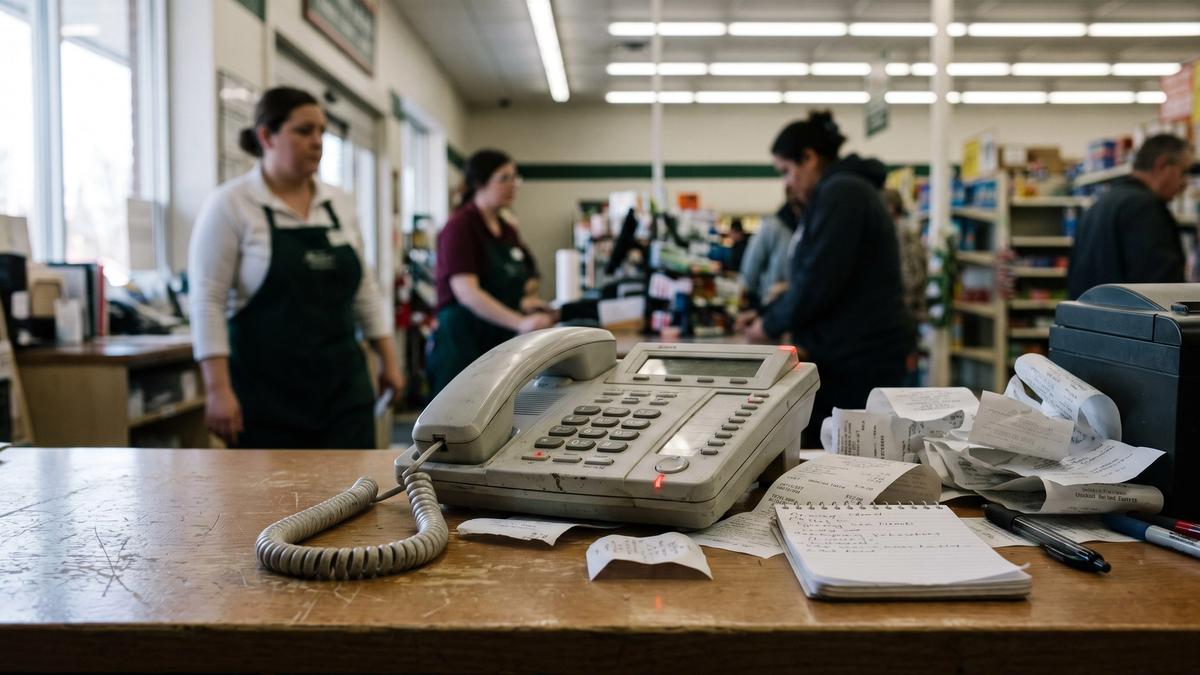
A customer calls a franchise location at 12:40 on a Tuesday. The counter has a line, both employees are mid-transaction, and the phone rings six times before the caller gives up. No voicemail. The customer searches the category again and calls a competitor two miles away. Nothing about this gets recorded. The franchisee never knows it happened, and neither does the franchisor. Franchise missed calls work exactly like this: a steady revenue leak that never appears on a P&L because no system measures the transactions that did not happen.
The math on franchise missed calls
The baseline numbers are worse than most operators assume. Across industries, businesses answer only about 38 percent of inbound calls. Another 38 percent land in voicemail and roughly 24 percent get no response of any kind. Home service businesses miss around 62 percent of their inbound calls, professional services miss 54 percent, and retail locations with staff at the desk all day still miss 48 percent.
What happens after the miss is the expensive part. About 85 percent of callers who reach voicemail never call back. Roughly 62 percent of unanswered callers contact a competitor instead. Missed calls cost an average small business roughly $126,000 per year, and a single missed call in home services is worth $300 to $1,200.
Run that against a network. Take 100 locations, each missing a conservative 15 calls per week, with an average ticket of $200. That is 78,000 missed calls a year. Even if only half of them carried real purchase intent, the network leaks $7.8 million in annual revenue. None of it shows up in any report a franchisor reads.
Why staffing will not fix it
The obvious answer is to tell franchisees to answer the phone. It does not work, for a structural reason: call volume peaks at exactly the moments staff are busiest. The lunch rush that fills the counter is the same lunch rush generating phone orders. A plumbing franchise gets its heaviest call volume during the morning dispatch window, when every coordinator is already on a line. Demand for attention spikes across channels at the same time.
Staffing for peak phone coverage means paying someone $35,000 or more per year, per location, to sit idle most of the day. Franchise unit economics run on thin labor models by design. Most franchisees cannot absorb a dedicated phone role, and the original unit-level P&L assumptions never included one.
The franchisor cannot see the leak
Here is the part that should bother franchise executives: missed calls are invisible at the network level. Royalties are calculated on captured revenue. If every location loses 5 to 10 percent of inbound demand at the phone, the royalty base shrinks by the same percentage, and no dashboard flags it.
A location with declining same-store sales gets attention. It shows up in rankings and triggers a field visit. A location missing 60 calls a month looks identical to a location missing none, because the measurement system only counts what got answered. The franchisor is managing the network on a dataset that excludes the failure mode.
After-hours demand goes to whoever answers first
Business hours cover maybe 50 of the week's 168 hours. Customers do not schedule their intent around them. The evening searcher with a burst pipe and the parent booking a kids' haircut at 9 pm both hit voicemail or a contact form, and the clock starts.
Speed decides who wins these. Responding to a lead within five minutes makes you 21 times more likely to qualify it than responding at 30 minutes, and 78 percent of customers buy from the first company that responds. A location that returns calls the next morning has usually already lost.
What AI phone agents change about the cost structure
AI voice agents now resolve calls with accuracy above 92 percent in well-configured deployments. The economics are what make them relevant to franchising specifically. A human-handled call costs around $5.50. An AI-handled call costs around $0.65. The median time to ROI breakeven is 3.2 months, driven mostly by how many calls a location was missing before.
For a franchise location, that means full phone coverage (every call, all 168 hours) at a cost no staffing model can match. The agent answers on the first ring, books the appointment, qualifies the caller, and routes the minority of calls that need a human to one. Just as important for the franchisor: every call now generates a record. The dataset that was missing starts to exist, location by location, and network-wide phone demand becomes something you can analyze.
There is also a consistency effect. Phone handling is one of the most variable customer experiences across a franchise network. One location answers in two rings with a trained greeting; another lets calls ring through to a full voicemail box. An AI layer standardizes that first interaction at every location simultaneously, which no training program has ever achieved.
Measure the leak before you fix it
The business case is sitting in your carrier logs. Pull last month's call data for your ten highest-volume locations. Count the calls that went unanswered or to voicemail. Apply the 85 percent no-callback rate and the location's average ticket. That number, annualized and extrapolated across the network, is what franchise missed calls are costing you right now.
Then pilot rather than mandate. Deploy AI call handling at five to ten locations, measure booked appointments per 100 inbound calls against matched control locations, and let the delta make the argument to the rest of the network. Franchisees adopt what visibly makes money.
Revscale builds AI agents that handle exactly this for franchise networks: answering, qualifying, and booking every inbound call while feeding the data back to the brand. Whatever platform you use, start with the carrier logs. The leak is measurable this week, and the locations losing the most are the ones that look fine on every report you currently run.