Franchise ADA Compliance: Why Franchisees Pay for a Franchisor's Blueprint
 Revscale AI Team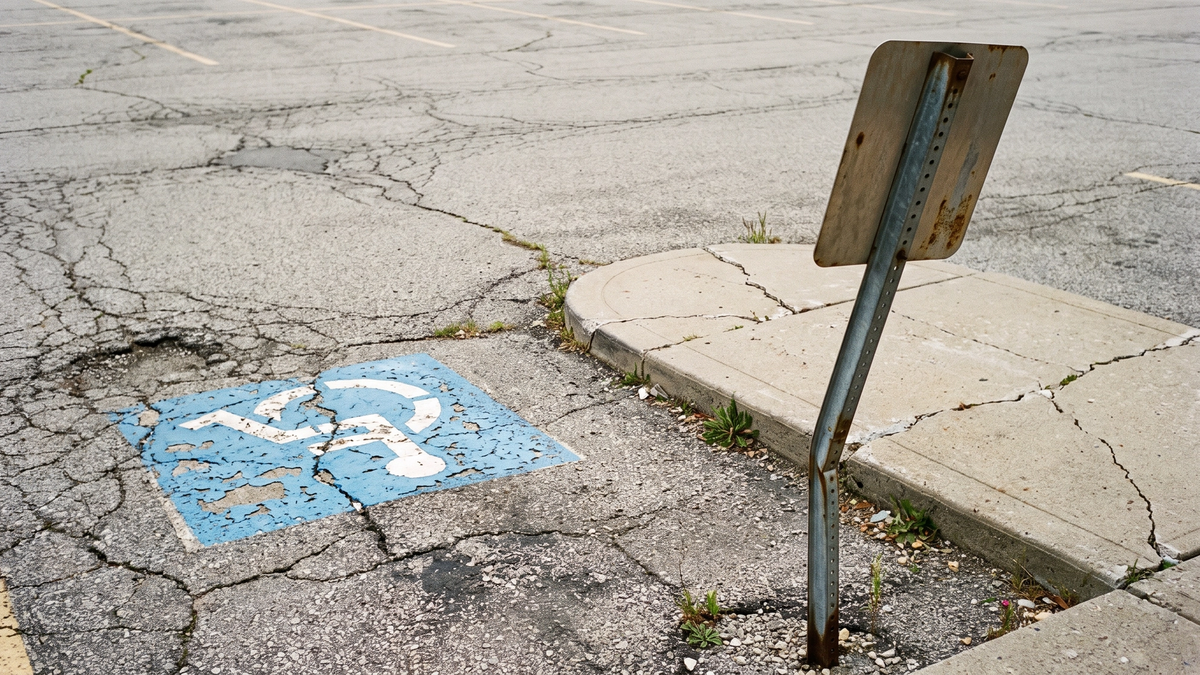
Every franchise operator assumes the accessibility of a store belongs to whoever designed it. That assumption is wrong, and it gets expensive at the worst possible moment: after a demand letter arrives, not before. The Americans with Disabilities Act attaches liability to whoever runs the location on the day someone can't get through the door, not to the franchisor whose prototype set the door width, the counter height, or the parking ratio. Franchise ADA compliance gets treated as something baked into the blueprint at headquarters. It is actually an operating liability that sits with whoever holds the lease.
What ADA Title III actually requires at the store level
Title III of the ADA covers any place of public accommodation, which includes essentially every retail, restaurant, and service franchise location in the country. The technical requirements come from the 2010 ADA Standards for Accessible Design: a minimum ratio of accessible parking spaces, with at least one van-accessible stall per six accessible spaces; a continuous accessible path of travel from the parking lot to the entrance; doors with at least 32 inches of clear width; service counters with a portion no higher than 34 inches; and restroom stalls with enough turning radius for a wheelchair. New construction and any alteration to an existing space must meet these standards in full. Older buildings get a lower bar, called readily achievable barrier removal, which asks only for changes that are easy to accomplish without much difficulty or expense.
Think of it less as a checklist and more as a chain. A curb without a ramp, a doorway six inches too narrow, a counter mounted two inches too high: any one of those breaks the chain for the person trying to get through it, and the rest of the store's compliance stops mattering to that customer.
Why franchisees end up paying for a franchisor's blueprint
Franchise agreements almost universally require the franchisee to build to the franchisor's prototype and brand standards manual. That manual sets the layout, the fixtures, the counter heights, and the signage package, often years before a given unit ever breaks ground. When those specifications conflict with what the ADA actually requires, the ADA wins, and the operator who pulled the building permit is the one named in the complaint, not the corporate design team that drew the plans. A franchisor's standard prototype can be non-compliant on day one in a jurisdiction with stricter local code, or simply outdated against a design manual that hasn't been revised since the last round of federal guidance. The franchisee still signs the lease, still owns the certificate of occupancy, and still answers the demand letter.
The lawsuit numbers behind the exposure
Federal courts saw roughly 8,667 ADA Title III lawsuits filed in 2025. Web accessibility claims now make up close to 77 percent of that docket, which means physical-access cases, the parking lots, restrooms, and paths of travel that apply directly to a franchise storefront, still account for something close to one in four filings nationwide. At franchise locations specifically, the violations named most often are parking lot design, restroom accessibility, counter heights, and missing signage, the exact items a franchisor's prototype controls.
The financial exposure scales with how the case resolves. Department of Justice civil penalties can reach $75,000 for a first violation and $150,000 for each one after that. Most cases never get there, but even a claim that settles quietly before trial typically runs $10,000 to $30,000 in legal fees, and once a court or consent decree sets the remediation scope, the construction cost to fix the underlying barriers commonly clears $50,000 per site. None of that includes the time a location loses if a fix requires closing part of the parking lot or a restroom during the work.
Where retrofits get triggered without anyone asking for them
Accessibility obligations do not sit still once a store opens. Any alteration to an existing space, a remodel, a new point-of-sale counter, added outdoor seating, a change to the entrance, triggers a requirement to bring the altered area, and often the accessible path leading to it, up to current standards, even if the original build was fully grandfathered. A change of ownership at resale usually requires a new certificate of occupancy, which puts a fresh set of eyes on a building that may have been quietly out of compliance for a decade. A franchisor-mandated remodel is the most common trigger of all, because it reopens the design file and forces a comparison between what the brand wants installed and what the ADA now requires at that specific address.
Building an accessibility audit that predates the demand letter
The operators who avoid six-figure exposure are the ones who commission a third-party accessibility survey before a complaint ever arrives, not after. That survey should cover the specific site, not the franchisor's generic prototype, because grade, curb placement, and local code vary by address even within the same brand. States including California, Texas, and Florida maintain certified access specialist programs, with California's CASp credential the best known, whose inspection reports carry legal weight if a case does end up in court. The resulting punch list should be ranked by cost and code priority, not alphabetically, starting with the items that are cheapest to fix and most frequently cited: restriping a van-accessible stall, adjusting a door closer's swing time, lowering a portion of a transaction counter. Keep the survey and the completed punch list on file at the unit level. Courts and plaintiffs' counsel both weigh documented, good-faith remediation efforts differently than they weigh silence.
What to fix before the next lease renewal or remodel
Before signing a new lease or starting a franchisor-mandated remodel, get a site-specific ADA survey done first, and negotiate who pays for any retrofit work into the lease itself. Tenant improvement allowances are frequently sized around finish-out costs and never anticipated accessibility work, which leaves the franchisee covering the gap out of pocket mid-buildout. Push back on any franchisor prototype spec that predates the current ADA standards or ignores stricter state code, in writing, before the permit gets pulled. Franchise networks that keep facilities and compliance records connected across every location, rather than scattered across individual unit files, catch an overdue survey while it's still a line item instead of after it becomes a docket number. Revscale's franchise intelligence tools exist for exactly that kind of cross-location visibility.
The unit that ends up in litigation is rarely the one with the worst ramp in the system. It's the one where nobody could produce a survey dated before the complaint.